
Octopus Energy’s Smart Tariffs Explained: Agile, Go & Tracker
- Ross Preen
- May 28
- 2 min read

Updated: Jun 11
I’ve been using Octopus Energy while charging my Tesla at home and tracking my daily, weekly, and yearly electricity usage through the Octopus app.
Which Of The Octopus Smart Tariffs Is Right For You?
The best Octopus smart tariff depends on how and when you use energy.
Octopus Go is often the best choice for electric vehicle owners who can charge overnight during cheaper off peak hours.
Octopus Agile suits households that can shift energy usage throughout the day and take advantage of lower wholesale electricity prices. Prices can change every 30 minutes, so it requires a more hands on approach.
Octopus Tracker appeals to customers who want a simpler tariff that follows wholesale energy prices without the frequent changes seen on Agile. Prices are updated daily rather than every 30 minutes.
For my own usage, Octopus Go offers the biggest benefit because I can charge my Tesla overnight at lower rates while keeping household energy costs under control.
Before switching, consider:
Whether you own an electric vehicle
If you have a smart meter installed
How flexible your energy usage is
Whether you prefer predictable or variable pricing
How much effort you want to put into monitoring prices
Choosing the right tariff can make a significant difference to your annual energy costs, especially if you regularly charge an EV or can shift energy intensive activities to cheaper periods.
After testing different charging habits and comparing home charging costs against Tesla Superchargers, I can see why Octopus smart tariffs have become popular with EV owners.
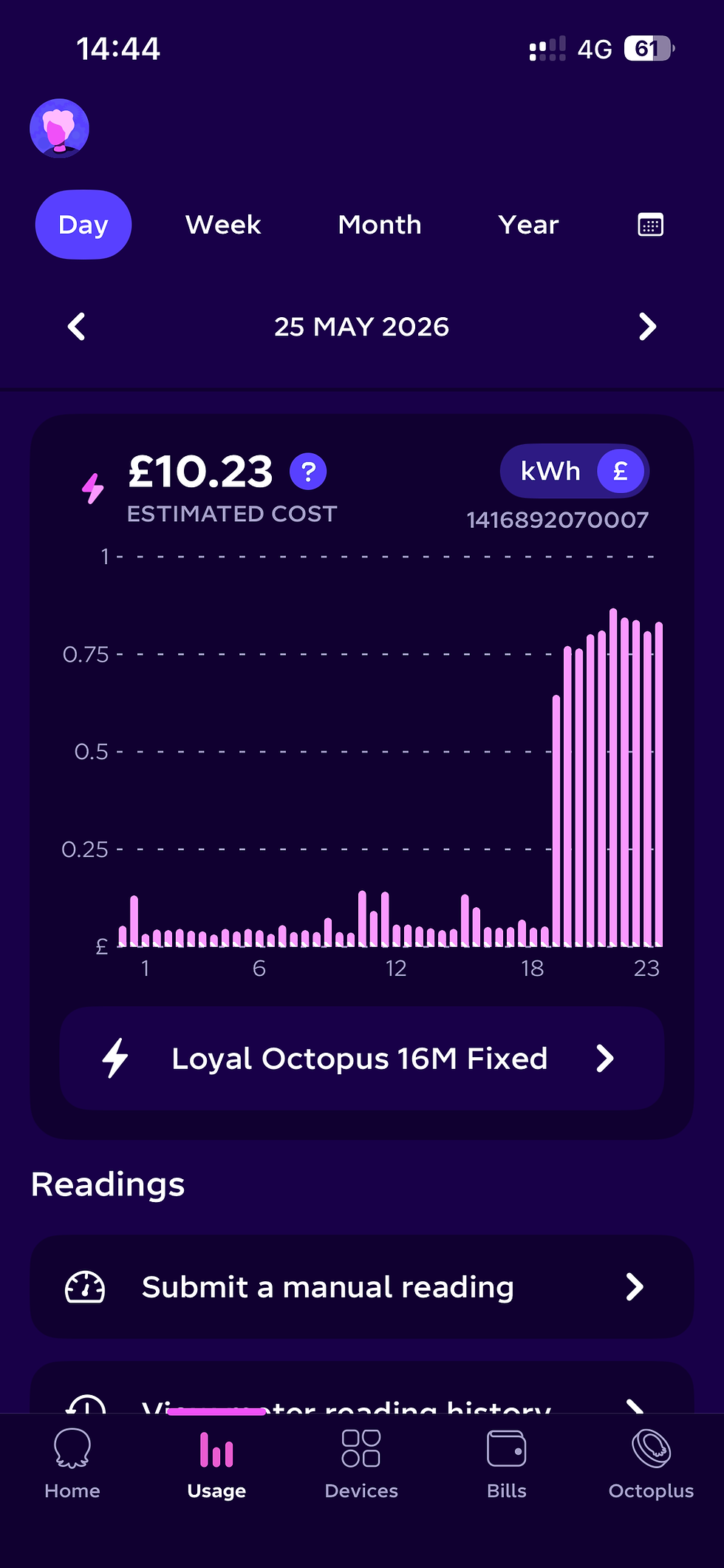
The screenshots below show my actual electricity usage, charging costs, and how overnight charging can make a big difference compared to public rapid charging.
What I’ve Found Using Octopus Smart Tariffs
• Overnight EV charging is far cheaper than Tesla Supercharging
• The Octopus app makes it easy to track daily and monthly usage
• Charging at off peak times massively reduces costs
• Smart tariffs work best if you can shift high usage into evenings or overnight
I currently use Octopus Energy myself and regularly monitor my Tesla charging costs, household electricity usage, and tariff performance through the app.


Home Charging vs Tesla Supercharging Costs
home = roughly 16.8p/kWh
Supercharger = 44p/kWh
massive overnight savings
Use my Octopus Energy referral link here to receive £50 credit when switching:http://share.octopus.energy/dusk-foal-263

Comments